

Table of Contents
If you run a local business, you already know the drill. Someone types “plumber near me” or “best coffee shop downtown,” and Google spits out three businesses at the top of the page. If you’re not one of them, you’re basically invisible. That’s the whole game right now, and it’s only getting more competitive.
So let’s talk about how to rank higher on Google locally, without the jargon and without wasting your time on stuff that doesn’t move the needle anymore.
Here’s the good news: local SEO in 2026 isn’t some mysterious black box. Google still rewards businesses that look real, act consistent, and give customers what they’re actually searching for. You don’t need a huge budget. You need the right moves, done in the right order.
Why Local SEO Matters More Than Ever
Think about the last time you searched for a business on your phone. Did you scroll to page two? Probably not. Most people click one of the top three local results, or they skip straight to a review or a map pin.
That’s why local SEO tips aren’t optional anymore, they’re survival. Whether you run a dental clinic, a landscaping company, or a bakery, your customers are searching before they ever walk through your door.
And here’s the part a lot of business owners miss: ranking well locally isn’t just about traffic. It’s about getting the right traffic. Someone searching “emergency plumber near me” is ready to call. That’s commercial intent, and it’s worth chasing hard.
Start With Your Google Business Profile
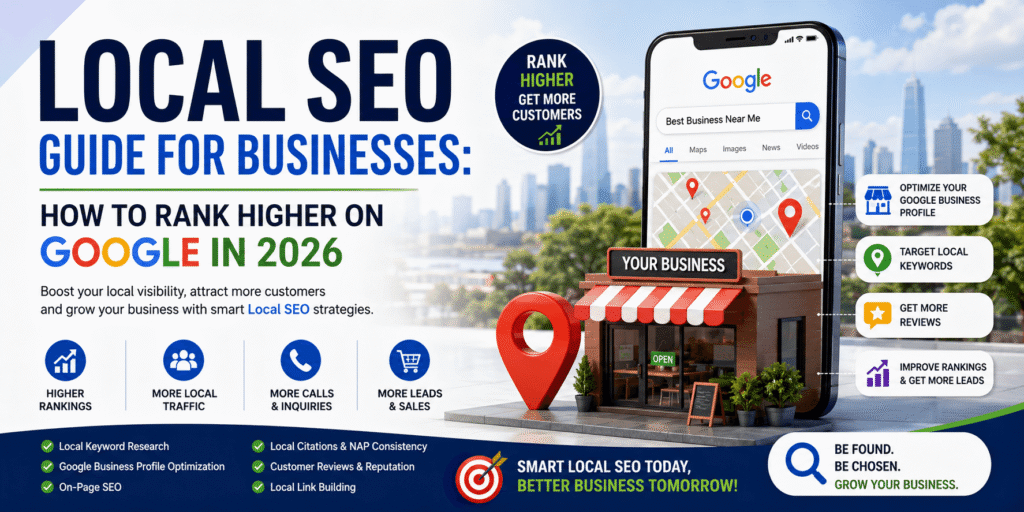
If you do nothing else after reading this, do this one thing. Google Business Profile optimization is still the single biggest lever for local rankings.
Here’s what actually matters:
- Claim and verify your profile if you haven’t already
- Fill out every single section, don’t leave anything blank
- Choose the most accurate primary category, and add relevant secondary ones
- Add real photos of your team, your storefront, your work, not stock images
- Keep your hours updated, especially around holidays
- Write a business description that sounds like a person wrote it, not a robot
A half-finished profile tells Google (and customers) that you’re not paying attention. A complete one signals the opposite.
Posts and Updates Still Count
Google Business Profile isn’t a set-it-and-forget-it tool. Posting updates, offers, or even quick announcements keeps your profile active. Google notices activity, and so do potential customers scrolling through your listing.
Nail Down Your NAP Consistency
NAP consistency (Name, Address, Phone) sounds boring, but it’s one of those things that quietly wrecks rankings when it’s wrong.
Here’s the problem. If your business is listed as “Smith’s Auto Repair” on your website, “Smith Auto Repair LLC” on Yelp, and “Smiths Auto” on Facebook, Google gets confused. And a confused Google doesn’t rank you with confidence.
Go through every place your business is listed and make sure the name, address, and phone number match exactly, down to the punctuation. It’s tedious, but it’s a one-time cleanup that pays off for years.
Local Citations Still Do Heavy Lifting
Local citations for SEO are basically mentions of your business on other websites, directories, review sites, chambers of commerce, industry-specific listings. They act like little trust signals scattered across the internet.
A few places worth prioritizing:
- Yelp
- Better Business Bureau
- Industry-specific directories (think Avvo for lawyers, Healthgrades for doctors)
- Local chamber of commerce sites
- Apple Maps and Bing Places
You don’t need hundreds of citations. You need accurate, relevant ones on sites that actually matter in your industry.
Understanding Google Maps Ranking Factors
A lot of business owners assume Google Maps rankings work differently from regular search rankings. They don’t, not really. The same core Google Maps ranking factors apply:
Relevance – Does your business match what the person is searching for?
Distance – How close are you to the person searching?
Prominence – How well-known and well-reviewed is your business?
You can’t control distance. But relevance and prominence? Those are entirely in your hands, and that’s where most of your effort should go.
Local Keyword Research: Know What People Are Actually Typing
Before you write a single page of content, figure out what your customers are actually searching for. Local keyword research isn’t complicated, but it does take a bit of digging.
Start simple:
- Type your service into Google and see what autocomplete suggests
- Check the “People also ask” section for related questions
- Look at what competitors are ranking for
- Use a free tool like Google Keyword Planner to check search volume
You’re looking for phrases like “affordable roofer in [city]” or “24 hour vet near me,” not generic industry terms. The more specific, the more likely that searcher is ready to buy.
On-Page SEO for Local Businesses
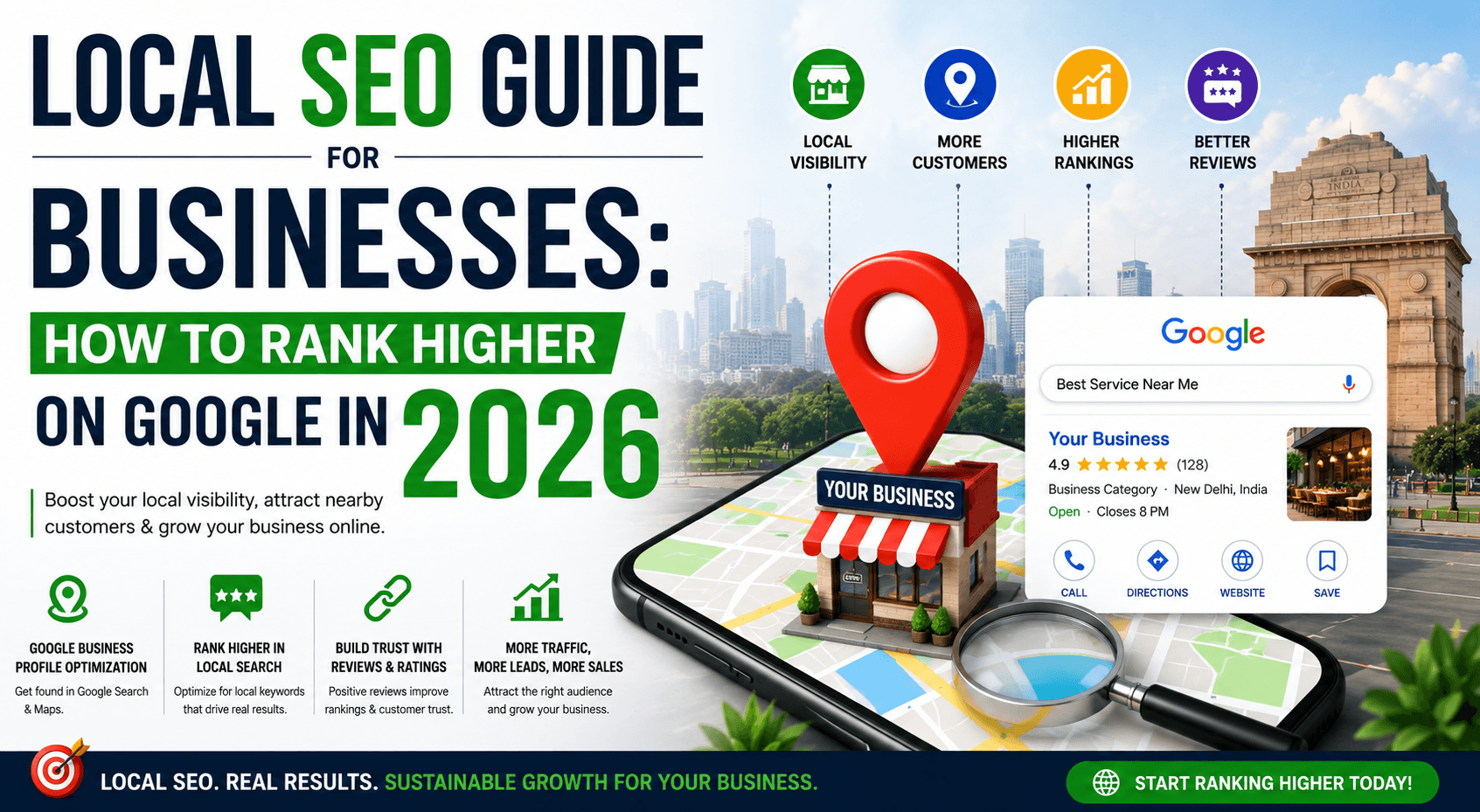
Your website still matters, even with all the focus on Google Business Profile. Solid on-page SEO for local businesses means making sure your site clearly tells Google (and visitors) where you are and what you do.
A few things worth checking on every page:
- Include your city or service area naturally in titles and headers
- Add a dedicated “service area” or “locations” page if you cover multiple cities
- Embed a Google Map on your contact page
- Make sure your NAP info is in your footer, on every page
- Keep page load speed fast, mobile users won’t wait around
Don’t stuff keywords in unnaturally. Google’s gotten a lot better at spotting that, and it just makes your content harder to read anyway.
Google Reviews and SEO: Why They’re Non-Negotiable
Here’s something a lot of business owners underestimate. Google reviews and SEO are tied together tighter than most people realize. Reviews aren’t just social proof for customers, they’re a ranking signal too.
Some practical ways to build up reviews without being pushy:
- Ask happy customers directly, right after a good experience
- Send a follow-up text or email with a direct review link
- Respond to every review, good or bad, it shows you’re engaged
- Never buy fake reviews, Google is very good at catching this now, and it can tank your visibility
Quality and consistency beat quantity. Ten thoughtful, recent reviews often outperform a hundred old, generic ones.
Local Link Building That Actually Works
Local link building doesn’t need to mean chasing after big-name publications. Local links, from local sources, tend to carry a lot of weight for local rankings.
Some ideas that work well without a huge budget:
- Sponsor a local event or sports team
- Partner with nearby businesses for cross-promotion
- Get listed on local news sites through community involvement
- Join local business associations that link back to members
These links tell Google your business is genuinely part of the community, not just an address on paper.
Don’t Sleep on Voice Search
Voice search local SEO is becoming a bigger deal every year, especially with more people using smart speakers and voice assistants on their phones. People don’t type the way they talk.
When someone types, they might search “best pizza [city].” When they speak, they’re more likely to say “what’s the best pizza place near me that’s open right now.”
To adapt:
- Write content that answers full questions, not just keyword fragments
- Keep your hours and location info crystal clear and up to date
- Focus on conversational phrases in your FAQ sections
Near Me Searches: What’s Really Behind Them
Near me searches SEO has exploded over the past few years, and it’s not slowing down. These searches almost always come from someone on their phone, often ready to visit or call within the hour.
To capture this traffic, make sure your Google Business Profile is airtight, your service area is clearly defined, and your website loads fast on mobile. Slow sites lose near me traffic fast, people just tap back and pick the next result.
Your Local SEO Checklist for 2026
Here’s a quick local SEO checklist to keep you on track:
- Google Business Profile fully filled out and verified
- NAP consistent across every listing
- Citations built on relevant, trusted directories
- Website optimized with local keywords and fast load times
- Steady stream of genuine Google reviews
- A handful of strong local backlinks
- Content that answers real questions your customers ask
Work through this list once, then revisit it every few months. Local SEO isn’t a “set it and forget it” project.
Building a Small Business SEO Strategy That Lasts
A solid small business SEO strategy isn’t about chasing every new trend. It’s about getting the fundamentals right and staying consistent. Google rewards businesses that show up reliably over time, not ones that do a burst of effort and then go quiet for six months.
Set aside a little time each month, updating your profile, checking your reviews, refreshing old content. Small, steady effort beats sporadic scrambling every time.
Frequently Asked Questions
How long does it take to rank higher on Google locally?
It varies, but most businesses start seeing movement within two to three months of consistent effort. Competitive industries or crowded cities can take longer, so patience matters here.
Do I need a website to rank in local search?
It helps a lot, but your Google Business Profile can carry you pretty far on its own, especially for newer businesses. A website still gives you more control and more places to target specific keywords.
How many Google reviews do I need to rank well?
There’s no magic number. What matters more is a steady flow of recent, genuine reviews rather than hitting some specific count all at once.
Is local SEO different from regular SEO?
Yes, in a few key ways. Local SEO leans heavily on your Google Business Profile, location-based keywords, and citations, while regular SEO focuses more broadly on content and site-wide authority.
Can I do local SEO myself, or do I need an agency?
Plenty of business owners handle the basics themselves, especially the Google Business Profile setup and review management. An agency can help if you’re short on time or competing in a tougher market.
Does posting on social media help with local rankings?
It doesn’t directly boost your Google rankings, but it drives traffic and engagement, which can indirectly support your visibility and brand searches over time.
